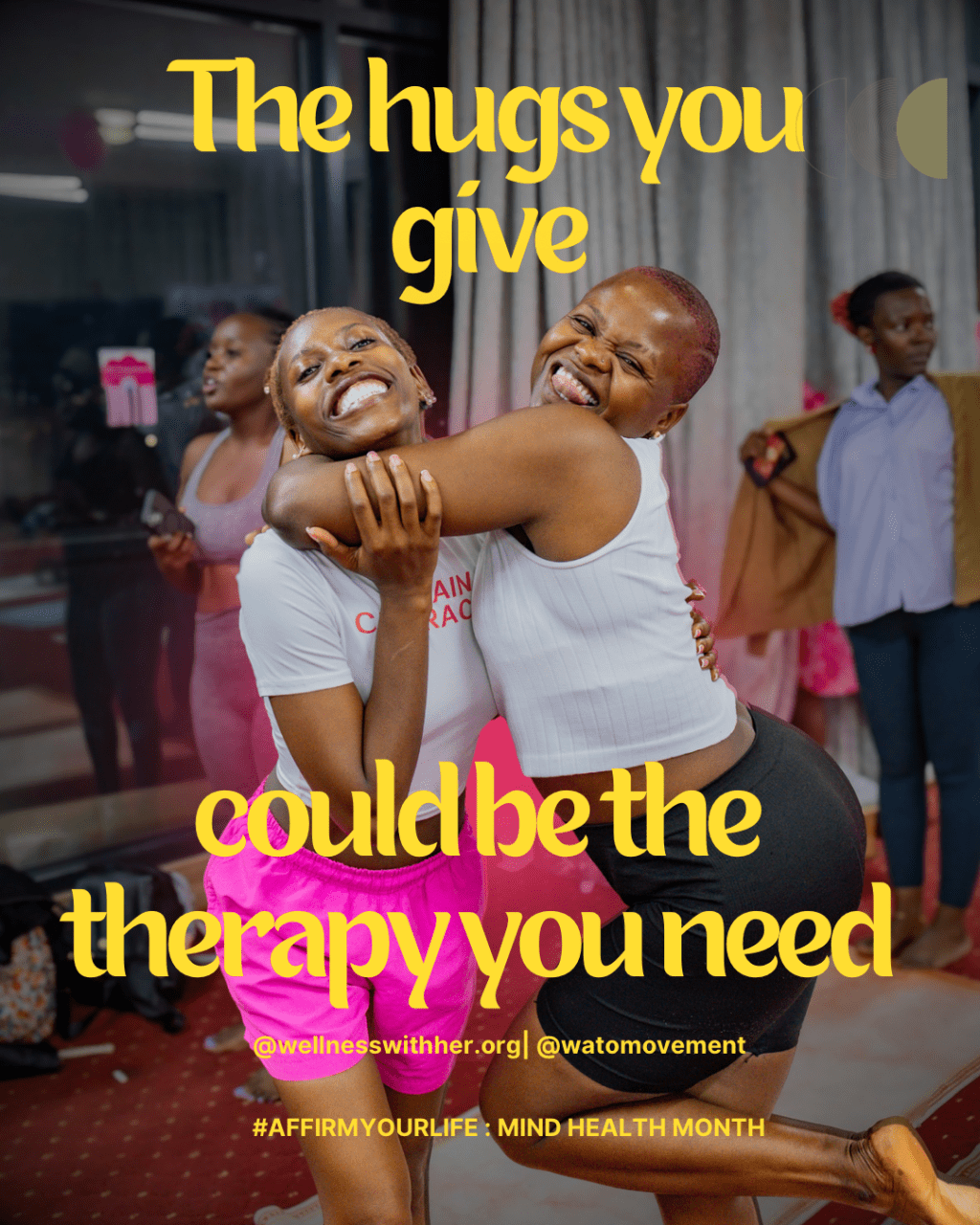
A Wato Movement essay for Mental Health Awareness Month
We are in the middle of a mental health crisis. Anxiety rates are rising. Depression is rising. Burnout is rising. And our cultural response has been to medicalize; professionalise, and individualise the problem; book a therapist, download an app, build a better morning routine, fix yourself.
All of these are useful. None of them are sufficient.
Because there is one intervention; ancient, free, universally available, and overwhelmingly supported by neuroscience; that has been almost entirely absent from the contemporary mental health conversation.
Physical touch.
The biological technology that humans have used to regulate each other’s nervous systems for as long as humans have existed is the one thing modern wellness culture has forgotten to talk about. And the consequences of that forgetting are showing up in our bodies, our relationships, and our mental health statistics.
The Touch-Deprived Generation
Tiffany Field, director of the Touch Research Institute at the University of Miami, has spent over forty years studying the effects of touch on human health. Her research has documented what she calls “touch hunger” a condition of chronic touch deprivation that is now affecting unprecedented numbers of adults, particularly in urban and post-pandemic environments.
Her findings are striking. Touch-deprived individuals show measurably higher levels of cortisol, elevated inflammatory markers, increased rates of depression and anxiety, weakened immune response, and disrupted sleep patterns. The body, in the absence of regular physical contact with other humans, begins to operate in a state of low-grade alarm.
Your nervous system was designed to be regulated through contact with other safe nervous systems. When that contact is absent; over weeks, months, or years; the body interprets the absence as a threat. And it responds accordingly.
We are living in the first generation in human history where it is possible to go days, sometimes weeks, without being physically touched by another person. And we are paying for it with our mental health.
What Touch Actually Does to the Brain
When you receive sustained, safe, physical touch from another person, your body initiates one of the most sophisticated and immediate neurochemical responses available to it.
Oxytocin is released; the hormone that promotes bonding, lowers anxiety, and counteracts the stress response. Cortisol drops, sometimes within minutes. Dopamine and serotonin; the neurotransmitters most closely associated with mood regulation, increase. Your vagal tone improves, meaning your nervous system becomes more capable of moving between activation and rest. Your inflammatory markers decrease. Your immune function improves.
And critically; your brain’s threat-detection system, the amygdala, becomes less reactive. The world begins to feel less hostile. People begin to feel less dangerous. You become more capable of experiencing connection, intimacy, and trust.
All of this from physical contact. No prescription. No appointment. No co-pay.
The C-Tactile Afferent; Your Skin’s Emotional Network
There is a specific type of nerve fibre in human skin called the C-tactile afferent. These fibres respond exclusively to gentle, social touch; the kind of touch that is slow, warm, and delivered by a safe person. They do not respond to functional touch like brushing against something or accidental contact. They respond specifically to the touch of another human being.
When activated, these nerve fibres send signals not to the somatosensory cortex; where most touch is processed; but directly to the insular cortex, which processes emotional experience, and the anterior cingulate cortex, which is involved in pain regulation and social bonding.
In other words, your skin has a dedicated neurological pathway for processing safe human touch as emotional medicine. It is not metaphor. It is hardware.
When we deprive ourselves of physical touch — through prolonged isolation, through cultural discomfort with closeness, through living in spaces where touch has become rare; this entire neurological system goes underused. And like any underused system, it begins to function less effectively.
Touch and Pain; Why Being Held Genuinely Hurts Less
One of the most striking findings in contemporary touch research is the degree to which physical contact reduces both physical and emotional pain.
A study published in Nature Neuroscience demonstrated that when participants held the hand of a romantic partner during painful stimuli, the brain regions associated with pain processing showed significantly reduced activation. The pain was still occurring. The body’s experience of it was changed.
This is not because the touch distracted them. fMRI scans showed that hand-holding activated the same neural pathways that opioid medication acts upon. The body, when touched by someone safe, produces its own internal pain relief.
The implications for mental health are profound. Emotional pain: grief, anxiety, depression, loneliness; is processed in many of the same neural regions as physical pain. The brain does not draw a clean line between the two. Which means that the same touch that reduces physical pain also has measurable effects on emotional pain.
Holding someone who is grieving does not just feel like it helps. It actually does.
The African Body Remembers
There is a particular cultural inheritance that African women, in many contexts, have grown up within — an embodied understanding that wellness is communal, that grief is held in proximity, that joy is shared in the body, and that touch is one of the languages of love that does not require translation.
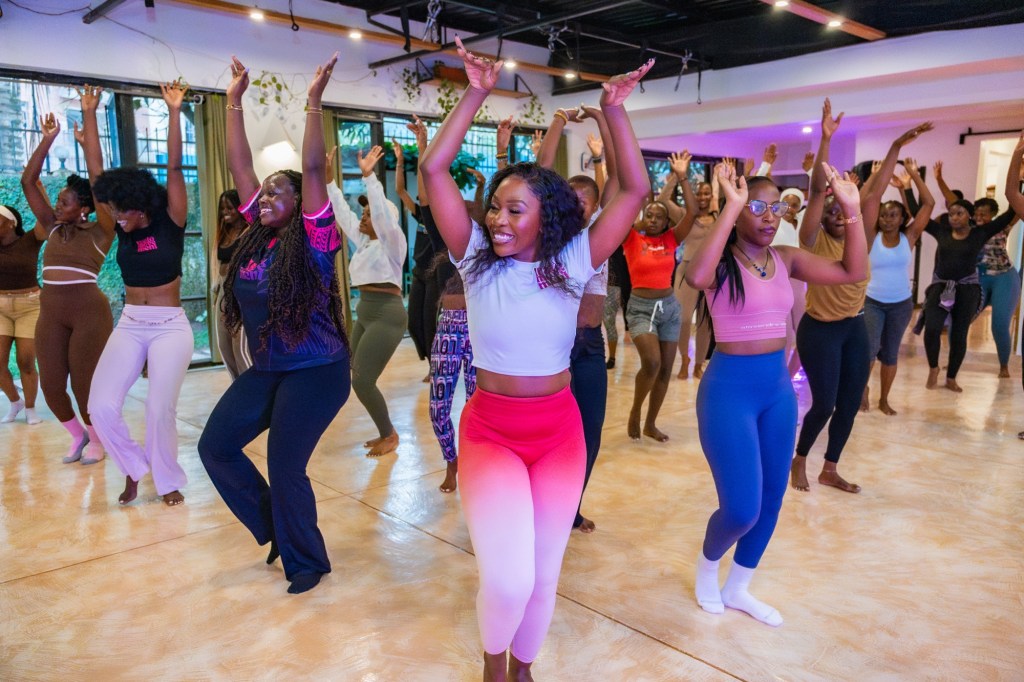
The way women braid each other’s hair. The way grandmothers hold babies. The way an aunt’s hand on your shoulder communicates something words cannot reach. The way collective dance; moving in rhythm with other bodies; has functioned as healing for generations.
This is not nostalgia. It is wisdom. And it is increasingly supported by the research that has only recently caught up with what African communities have practised for centuries.
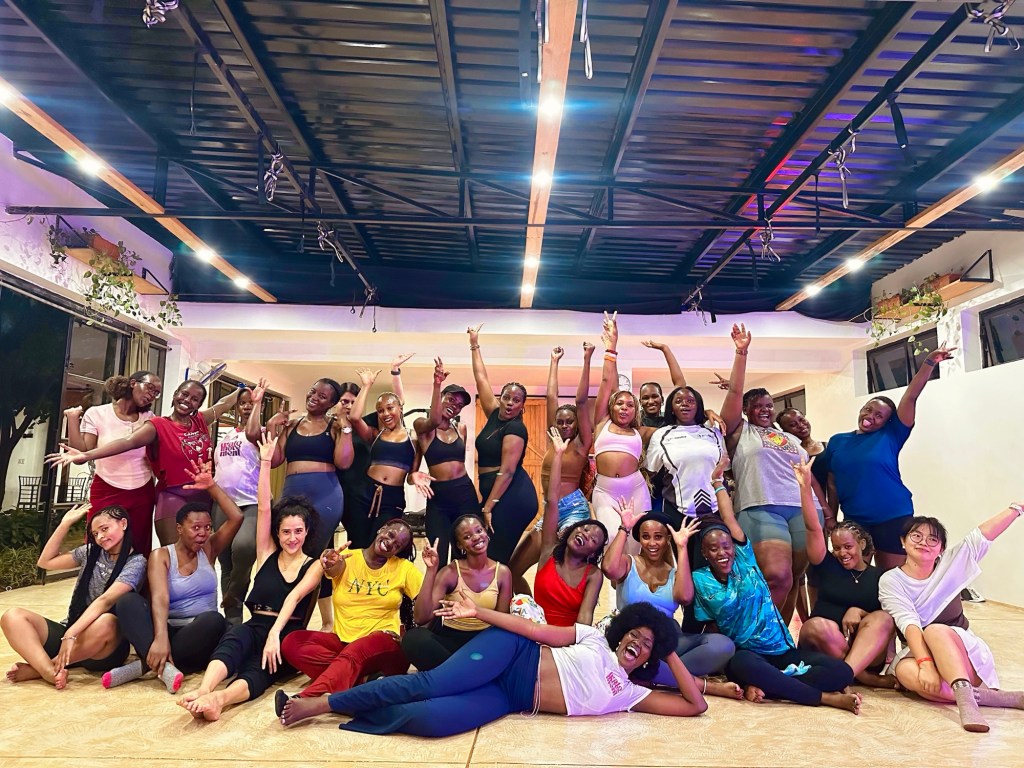
Wato Movement was built, in part, around this understanding. When women move together in a room — when bodies share rhythm and breath and proximity — the nervous system receives information that no individual practice can replicate. The body remembers that it is not alone. The mind, which has been carrying the weight of everything, begins to set some of it down.
You cannot meditate your way out of touch hunger. You cannot journal your way out of nervous system dysregulation that comes from prolonged isolation. The body needs what the body needs. And what it needs, often, is to be in a room with other bodies, moving, breathing, present.
Why We Have Stopped Touching Each Other
If touch is so essential, why have we drifted so far from it?
Several reasons converge.
Urbanisation. Modern urban life has shrunk our households, scattered our families, and replaced the physical proximity of community with digital connection. We live alone or in smaller groups than humans have ever lived in. The opportunities for casual, daily physical contact have decreased dramatically.
Professionalisation of care. As we have rightly built protections against inappropriate touch in workplaces, schools, and public spaces, we have also; unintentionally; created a culture where adult-to-adult physical contact has become rare, suspect, and reserved for romantic relationships only. Platonic touch between friends, especially among adult men, has become culturally unusual in many contexts.
The pandemic legacy. Years of being told that proximity was dangerous have left a residual wariness about physical closeness. Many people have not fully returned to the touch-frequency of their pre-pandemic lives.
Digital substitution. We have replaced presence with screens. A heart emoji is not a hug. A WhatsApp voice note is not a hand on a shoulder. We know this, but we have nevertheless built lives where digital connection has become the primary mode and physical presence the exception.
The result is a generation of adults; particularly women carrying disproportionate emotional and caregiving loads; who are exhausted, depleted, and chronically touch-hungry, while also being told by mainstream wellness culture that the answer to their distress is more individual self-care.
It is not. Or at least, not only.
What This Means for Mental Health Awareness Month
The dominant message of Mental Health Awareness Month tends to be: seek help, reduce stigma, talk about it. All vital.
But there is another message that deserves equal attention this month: the people in your life are part of your mental health infrastructure. Not as substitutes for professional care. As complements to it. As foundational. As biologically necessary.
The hug you give your tired friend is not a small gesture. It is a neurological intervention.
The hour you spend physically present with someone who is struggling; sitting with them, holding their hand, simply being in their proximity; has measurable effects on their cortisol, their oxytocin, their nervous system regulation, and their capacity to face the next day.
The community of women who move together once a week is not just exercising. They are co-regulating each other’s nervous systems through shared physical experience.
The dance floor is medicine. The embrace is medicine. The hand on the back as someone cries is medicine.
We have forgotten this. And the forgetting is showing up in our mental health statistics.
Practical Reclamation
So what do we actually do with this information?
Hug longer. Twenty seconds minimum. Most of the hugs we exchange are too short to trigger meaningful oxytocin release. Hold the person you love for the full twenty seconds. Notice how it changes.
Reintroduce platonic touch. Hold your friends’ hands. Hug your siblings. Sit shoulder-to-shoulder with someone you love. Adult life has stripped these practices from us. We are allowed to reclaim them.

Move in proximity. Dance classes. Group exercise. Yoga in a shared space. The proximity itself is regulating, even when you are not directly touching the people around you.
Prioritise in-person presence. When someone you love is struggling, show up physically when you can. The text matters. The voice note matters. But the physical presence does something neither can replicate.
Receive as well as give. Many women are deeply uncomfortable with being touched, held, or cared for. Often this discomfort is the result of touch-deprivation itself; the longer we go without it, the stranger it feels when it returns. The discomfort is information, not instruction. Practise receiving.
A Different Kind of Mental Health Practice
What if mental health; for this month, and beyond, were not just about what we do to ourselves but about what we do for each other?
What if we treated physical presence as the foundational practice it actually is?
What if the most radical thing you did this Mental Health Awareness Month was not to download another meditation app, but to call a friend, sit beside her, and stay long enough for both your nervous systems to remember that they are not alone?
The medicine we are looking for is not always inside the wellness store. Sometimes it is in the people we have not yet reached for.
The body knows. The science confirms it. The work is to start reaching again.
This essay was written for Mental Health Awareness Month by Wato Movement and Wellness With Her Club. We believe that wellness is communal, that the body holds wisdom the mind cannot always access, and that the most powerful interventions are often the ones we have already forgotten.
@watomovement | @wellnesswithherclub



 Wellness With Her Club
Leave a comment