In recent years, the word wellness has become increasingly common in both personal and public conversations. It appears in healthcare discussions, corporate programs, school curricula, and digital self-care spaces. But what does wellness actually mean, and why is it important to individuals and communities especially women and girls in East Africa?
This article explores wellness beyond the buzzword: what it is, why it should be taken seriously, and how it can be practically integrated into your daily life.
Let’s define Wellness
At its core, wellness is a multi-dimensional process of achieving and maintaining optimal health and functioning. It is not the absence of disease, nor is it limited to physical fitness. Instead, it encompasses several interrelated domains: physical, emotional, mental, social, and in some cases, spiritual well-being.
The Global Wellness Institute defines wellness as “the active pursuit of activities, choices, and lifestyles that lead to a state of holistic health.” This emphasizes that wellness is not a passive condition, but a conscious, ongoing process.
Importantly, wellness is contextual. For example, how a rural adolescent girl in Uganda approaches wellness may differ significantly from a corporate worker in an urban setting, but the underlying principles awareness, balance, and agency remain relevant in both scenarios.
Why Wellness Matters
There are both personal and structural reasons to prioritize wellness.
1. At the individual level:
- People who prioritize wellness tend to experience improved mental health, better stress management, more stable emotions, and stronger physical resilience.
- Wellness practices can help prevent chronic illness, increase energy, support better sleep, and improve focus.
- In contexts where resources are limited or stress levels are high, basic wellness practices like establishing routines, setting boundaries, or staying hydrated can significantly improve our quality of life.
2. At the social and community level:
- Wellness contributes to stronger, more cohesive communities. When individuals are mentally and physically well, they are more likely to participate in education, work, caregiving, and civic life.
- A wellness-informed community is better equipped to address public health issues, reduce gender-based disparities, and enhance inclusive development.
In regions where women and girls disproportionately bear the burden of household labor, caregiving, and economic marginalization, wellness is not a luxury. It is a form of equity-building, which is basically a means to strengthen their capacity, agency, and ability to fully participate in society.
Why People Avoid or Overlook Wellness
Despite its importance, wellness is often misunderstood, underestimated, or dismissed as unattainable.
- Cultural norms may discourage rest or emotional expression, especially among women.
- Economic pressures often push wellness to the background, as individuals prioritize survival over self-care.
- Misinformation (often online) equates wellness with expensive products or elitist trends, making it seem irrelevant to everyday life. In Uganda, it is sometimes equated to pharmacies or hospitals and yet it goes beyond that.
Correcting these misconceptions is key. Wellness is not about perfection, nor is it about consumption. It is about alignment between what your body, mind, and life circumstances need, and how you respond.
Applying Wellness in Daily Life: A Practical Framework
So how does one “do” wellness? The answer varies by individual, but the principles are adaptable. Below are several areas to consider:
1. Physical Wellness
- Regular movement: walking, stretching, or any physical activity you enjoy.
- Sleep hygiene: creating routines that promote quality rest.
- Nutrition: eating in ways that nourish rather than deplete.
- Hydration: maintaining basic water intake, especially in hot climates.
2. Emotional and Mental Wellness
- Journaling or reflection: noting how you feel and what you need.
- Setting limits: saying no without guilt, especially to protect your mental bandwidth.
- Seeking support: talking to a friend, community leader, or therapist if accessible.
3. Social Wellness
- Maintaining supportive relationships.
- Creating space for open, respectful conversations.
- Participating in group or community activities that affirm your values.
4. Environmental and Habitual Wellness
- Keeping your space clean and organized as a form of mental clarity.
- Establishing daily or weekly rituals like morning breathing exercises, quiet time, or tech-free evenings.
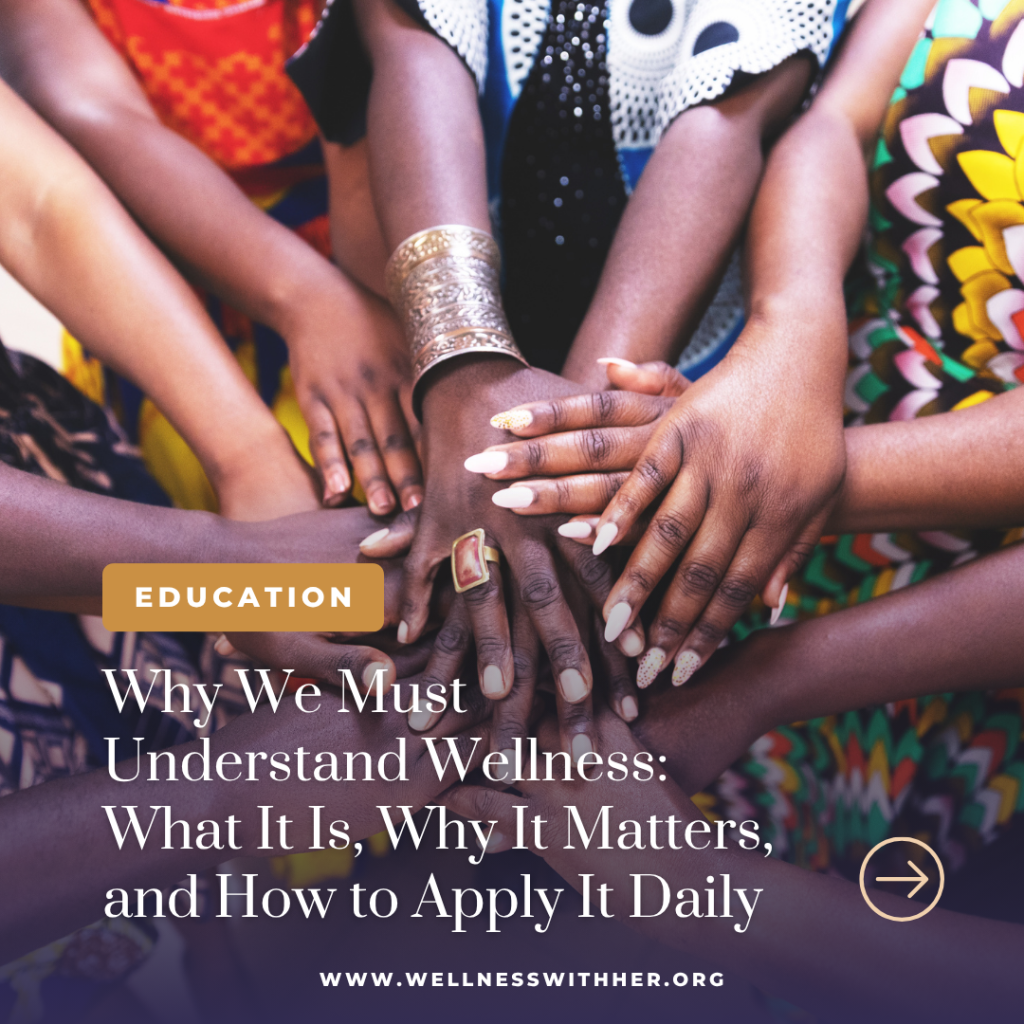
Wellness Is Strategic, Not Sentimental
Wellness should not be confused with indulgence or wishful thinking. It is a strategic framework for resilience especially for women and girls who navigate intersecting challenges related to gender, economy, and culture.
By including wellness into our daily life, we are able to build stronger foundations for everything else: productivity, relationships, learning, and leadership. It enables us not just to get by, but to participate meaningfully in the world around us.
Whether you are a student, a professional, a mother, or someone simply trying to take better care of yourself, wellness is relevant to you. It is something you can build slowly, consistently, and with intention.
Because health isn’t just about the body. It’s about the whole person.




 Wellness With Her Club
Leave a comment