
Consent is often framed as a purely physical or sexual concept, but for women and girls, the need for consent extends far beyond the body. Emotional demands, digital intrusion, social pressure, and psychological manipulation all create environments where boundaries are violated long before any physical harm occurs. Understanding these layered forms of consent is essential in the fight against Gender-Based Violence because most violence begins with small breaches that were normalised, dismissed, or ignored.
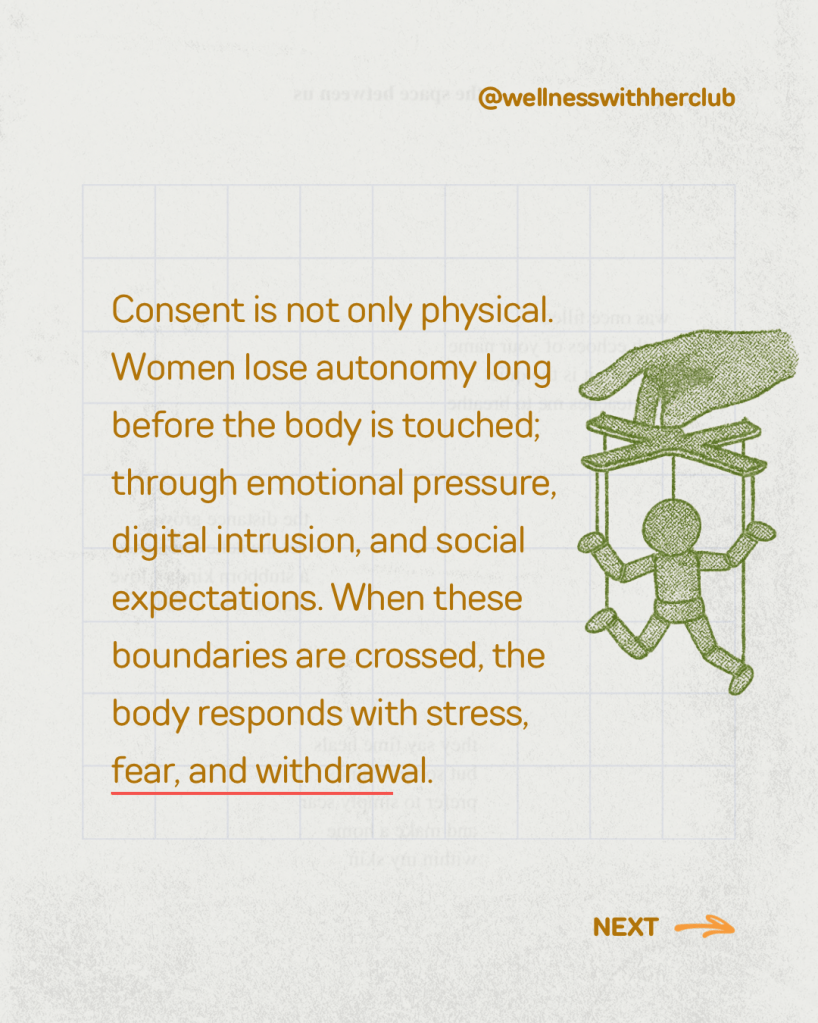
Emotional consent requires that a woman’s time, energy, and emotional labour are respected. Yet many women are conditioned to absorb others’ burdens without being asked. They become default counsellors, mediators, and supporters in situations where they never agreed to carry emotional weight. Emotional overreach often shows up through guilt-tripping, excessive expectations, love-bombing, or pressure to provide comfort at personal cost. Without emotional consent, women become depleted and emotional depletion weakens boundaries in every part of life.

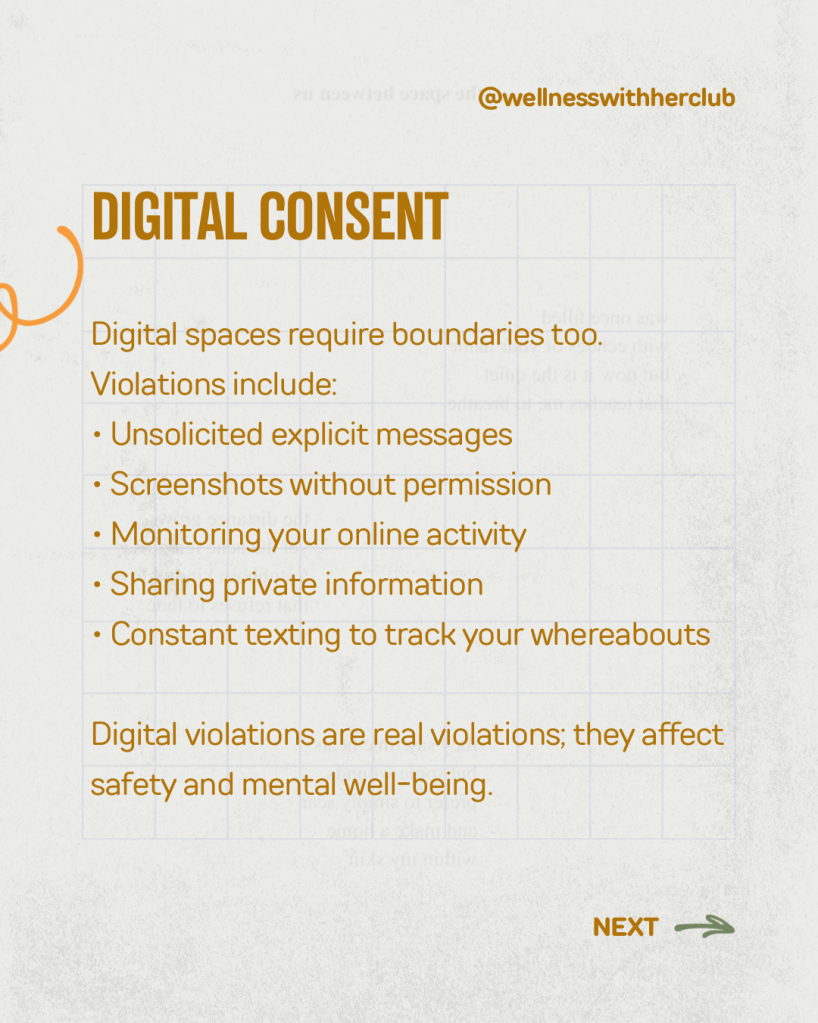
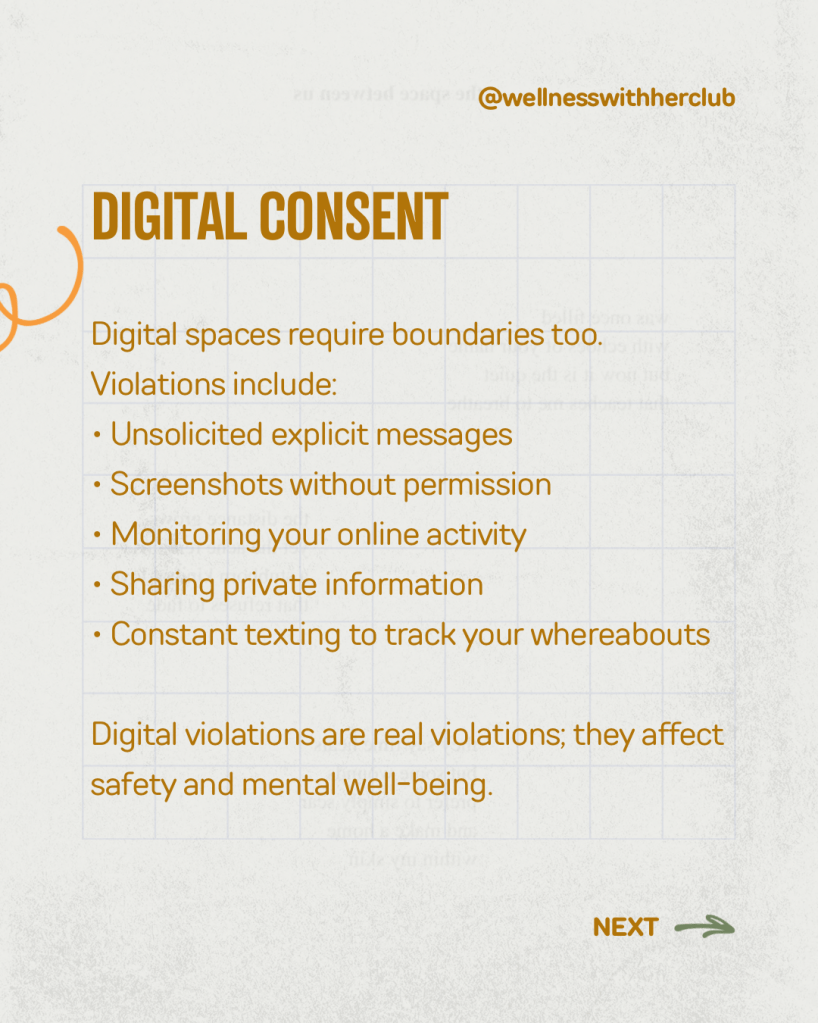
Digital consent has become urgent in a world where connection is constant and surveillance is easy. Unsolicited messages, screenshots taken without permission, digital monitoring by partners, sharing private information, stalking behaviours, and non-consensual exposure (including image misuse) represent violations as serious as those committed offline. Digital consent protects autonomy, privacy, and psychological well-being. When breached, the body responds with the same survival instincts tight muscle tension, increased heart rate, fear, vigilance that physical threats provoke.
Social consent concerns how society claims access to women’s lives, choices, and bodies. It appears in unwanted advice, social pressure, policing of behaviour, expectations of availability, and the assumption that women must accommodate others. Women are expected to smile on command, tolerate discomfort, be “polite” even when unsafe, or accept treatment that violates their boundaries. These social pressures shape posture, silence instinctive reactions, and train the body to endure rather than resist.
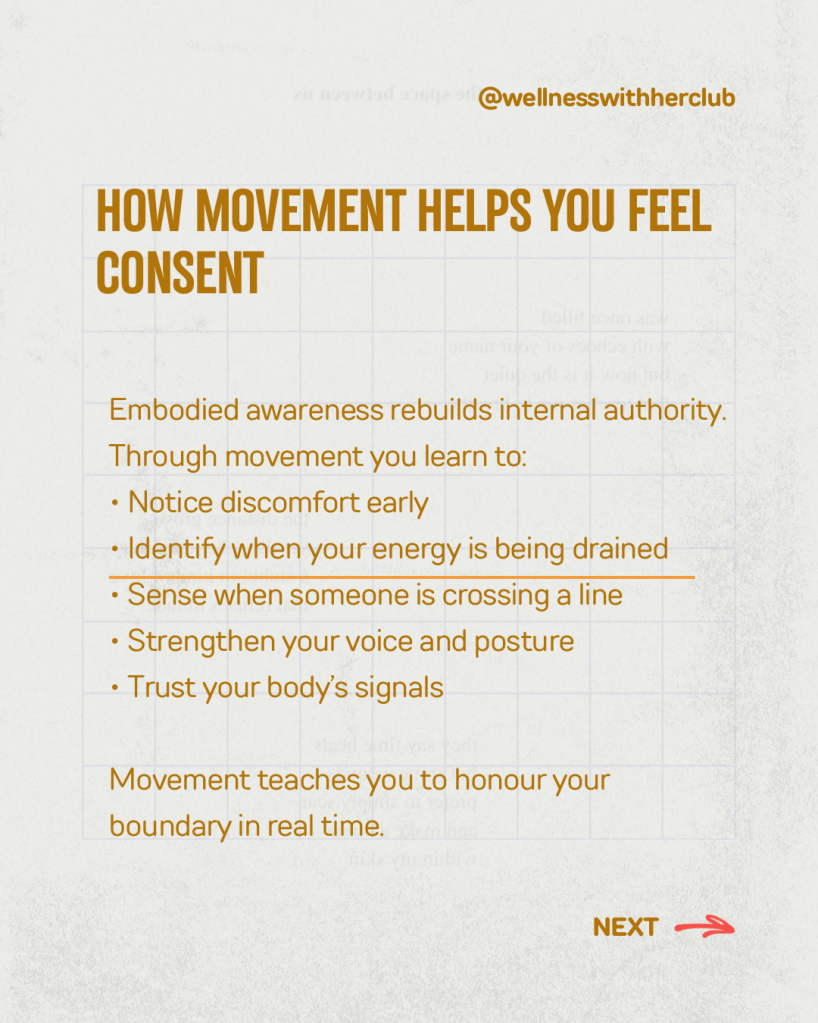
Embodied wellness becomes a powerful tool in this conversation. Through intentional movement, breathing, grounding, and somatic awareness, women learn to recognise early signals of discomfort; tightness in the chest, a sinking in the stomach, held breath, clenched jaw, or emotional disconnection. The body speaks long before the mind rationalises, and embodied awareness teaches women to trust these cues. When a woman can feel her boundaries, she can enforce them. When she can sense disconnection, she can refuse emotional labour. When she notices discomfort, she can interrupt digital or social overreach. Movement realigns internal authority, making consent not just a concept but a lived experience.
Expanding the conversation on consent protects women’s agency. When consent becomes holistic; emotional, digital, social, physical, women reclaim their time, their voice, their presence, and their autonomy. This is how we build cultures of safety and respect. This is how we end violence at its earliest roots.



 Wellness With Her Club
Leave a comment