Making wellness a practical thought for rural Uganda
By Rianne Lelia Bateeze.
The concept of wellness often feels out of reach for many adolescent girls, especially those living in rural communities in Uganda. The challenges are complex: limited access to health services, household responsibilities, school pressures, and entrenched gender norms. But wellness; defined as a state of physical, mental, and emotional well-being, is both relevant and attainable, even within these constraints. We focus on this demographic because as of 2023, Uganda was predominantly rural, with approximately 73.23% of its population residing in rural areas . The nation also boasts one of the youngest populations globally, with over 70% of Ugandans under the age of 30 .
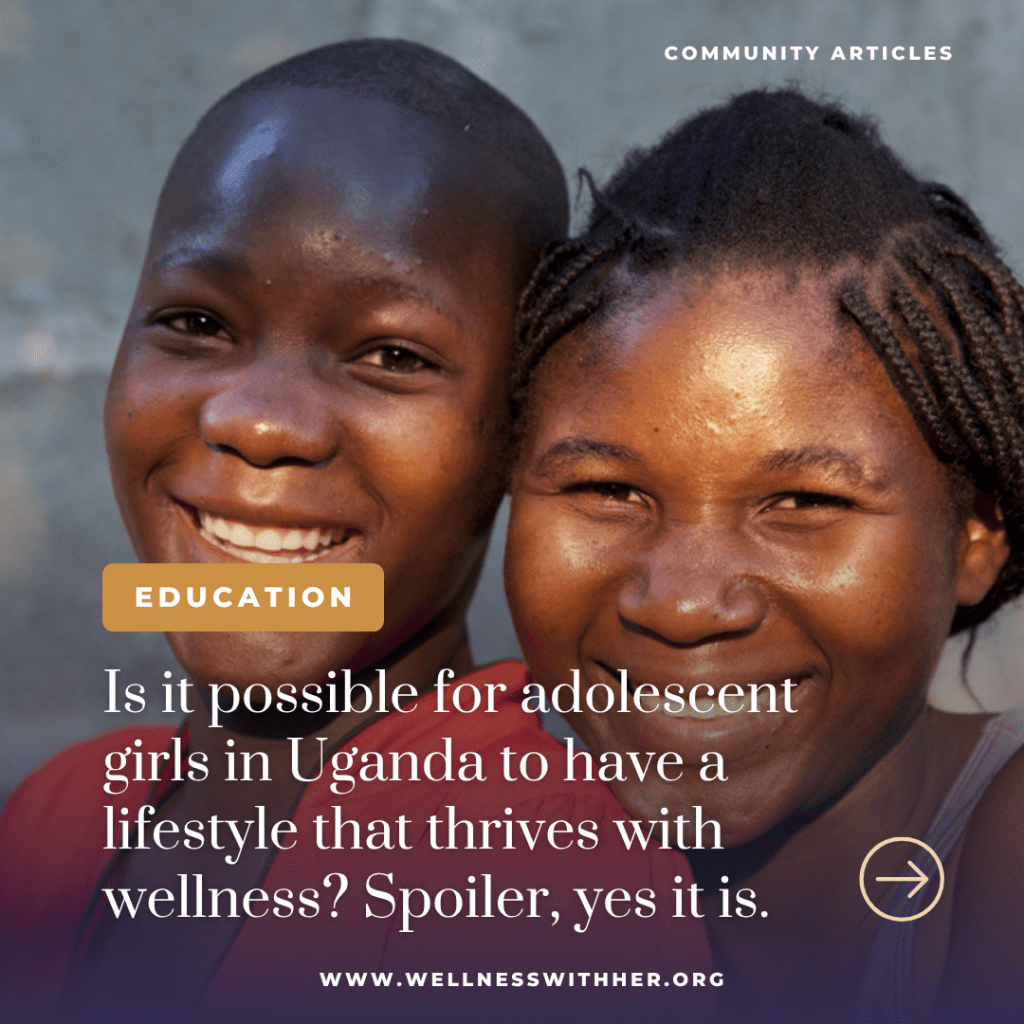
This article unpacks what wellness can look like for a rural adolescent girl in Uganda, how we wellness practitioners can offer conversion as well practical, context-appropriate approaches.
Understanding the Starting Point
In many rural Ugandan communities, adolescent girls face unique barriers:
- Limited access to healthcare, especially reproductive health and mental health services.
- Domestic workload which includes but isn’t limited to cooking, fetching water, caring for siblings, which leaves little time for personal care or rest.
- Stigmas around menstruation and mental health, leading to shame and silence.
- Social pressures to marry early or leave school.
- Scarce resources like clean water, safe spaces, or consistent schooling.
Wellness must therefore be defined in terms that respect these realities. It cannot be imposed from the outside; it must be built from within the community starting with what is available and possible.
Key Dimensions of Wellness for an Adolescent Girl
1. Physical Wellness
Even with minimal resources, physical well-being can be supported through:
- Basic hygiene: Using clean water to wash, safely managing menstruation (e.g., cloth pads, reusable sanitary kits), and understanding personal care.
- Nutrition: Eating locally available, balanced meals (e.g., including beans, greens, maize, and fruits). Avoiding processed foods where possible.
- Movement: Walking to school, doing chores, or informal play all contribute to fitness and strength.
2. Emotional and Mental Wellness
Though often overlooked, mental well-being is crucial, especially for girls navigating puberty, identity, and increasing expectations. Strategies include:
- African Traditional Games: Sports like kwepena, duulu, bladda and so many more
- Self-reflection: Quiet moments in the morning or evening to process thoughts, either mentally or through a journal (if possible or applicable).
- Peer support: Talking to a trusted friend or relative about feelings or worries. Emotional connection builds resilience.
- Creative expression: Singing, drawing, dancing, storytelling these are cultural tools that also serve as emotional outlets.

3. Social Wellness
Relationships and social environments directly impact a girl’s well-being. She can:
- Participate in school or church groups that encourage a culture of belonging and positive interaction.
- Seek mentorship: From teachers, elders, or community leaders who can offer guidance and perspective.
- Learn to set small boundaries saying no when overwhelmed, or asking for help with chores to create breathing room.
4. Personal Agency and Awareness
Wellness also means learning to:
- Understand her body: Knowing what menstruation is, recognizing signs of illness, and not feeling shame about natural changes.
- Conscious affordable nutrition: Understanding she can access fruits and vegetables for her meals such as mangoes, avocadoes, bananas, groundnuts, sugarcane and so much more. The traditional African way of life- of communion where children were rewarded for activities such as sweeping a neighbour’s compound come to mind and should be encouraged.
- Ask questions: About health, education, or relationships even when answers aren’t always immediate.
- Protect herself: Knowing basic rights and recognizing unhealthy behavior in others. Avoiding said people if possible or find entities or individuals that can genuinely support her.
What Role Do Families and Communities Play?
An adolescent girl’s wellness cannot rest on her shoulders alone. Support structures matter:
- Parents and guardians can prioritize open conversations about health, puberty, and safety.
- Schools can integrate wellness topics into lessons such as nutrition, mental health, reproductive health in simple, respectful language.
- Community groups or NGOs can create safe spaces, provide sanitary kits, or offer mentorship programs that help girls navigate their challenges.
Making Wellness Sustainable
Wellness, especially in rural contexts, should be:
- Culturally respectful: Rooted in local practices and values.
- Economically feasible: Using what is available (e.g., local foods, free movement).
- Integrated into daily life: Not added on, but woven into existing routines.
- Community-supported: Empowering girls without isolating or burdening them.
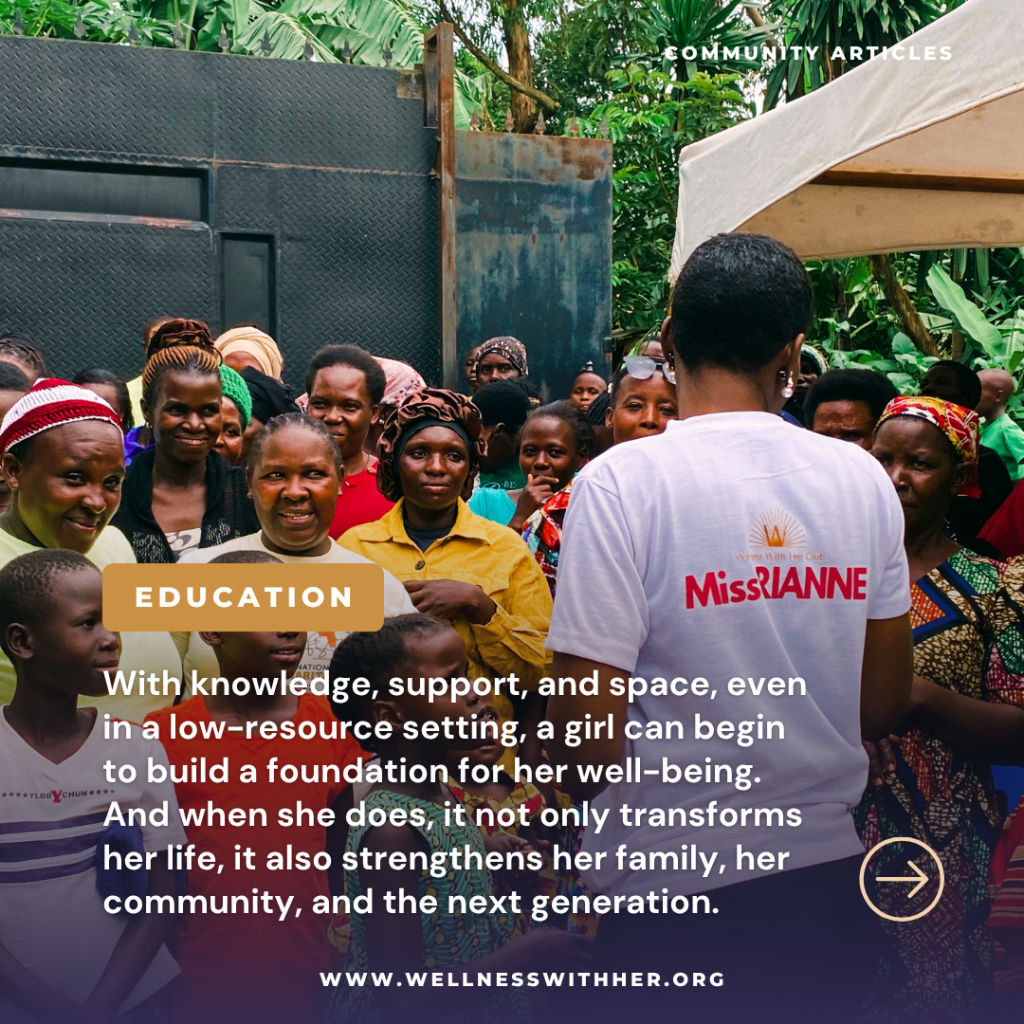
So is it possible for adolescent girls in Uganda to have thriving wellness routines?
The answer, we know, is yes.
Wellness for an adolescent girl in rural Uganda is not about mimicking urban or Western models. It’s about recognizing the value of her own life, body, and voice and taking practical steps, no matter how small, toward balance and self-understanding.
With knowledge, support, and space, even in a low-resource setting, a girl can begin to build a foundation for her well-being. And when she does, it not only transforms her life it strengthens her family, her community, and the next generation.
So dear reader, what role do you play in all this and how can we aid in having a conversion in mindsets and degrees of wellbeing?

 Wellness With Her Club
Leave a comment